


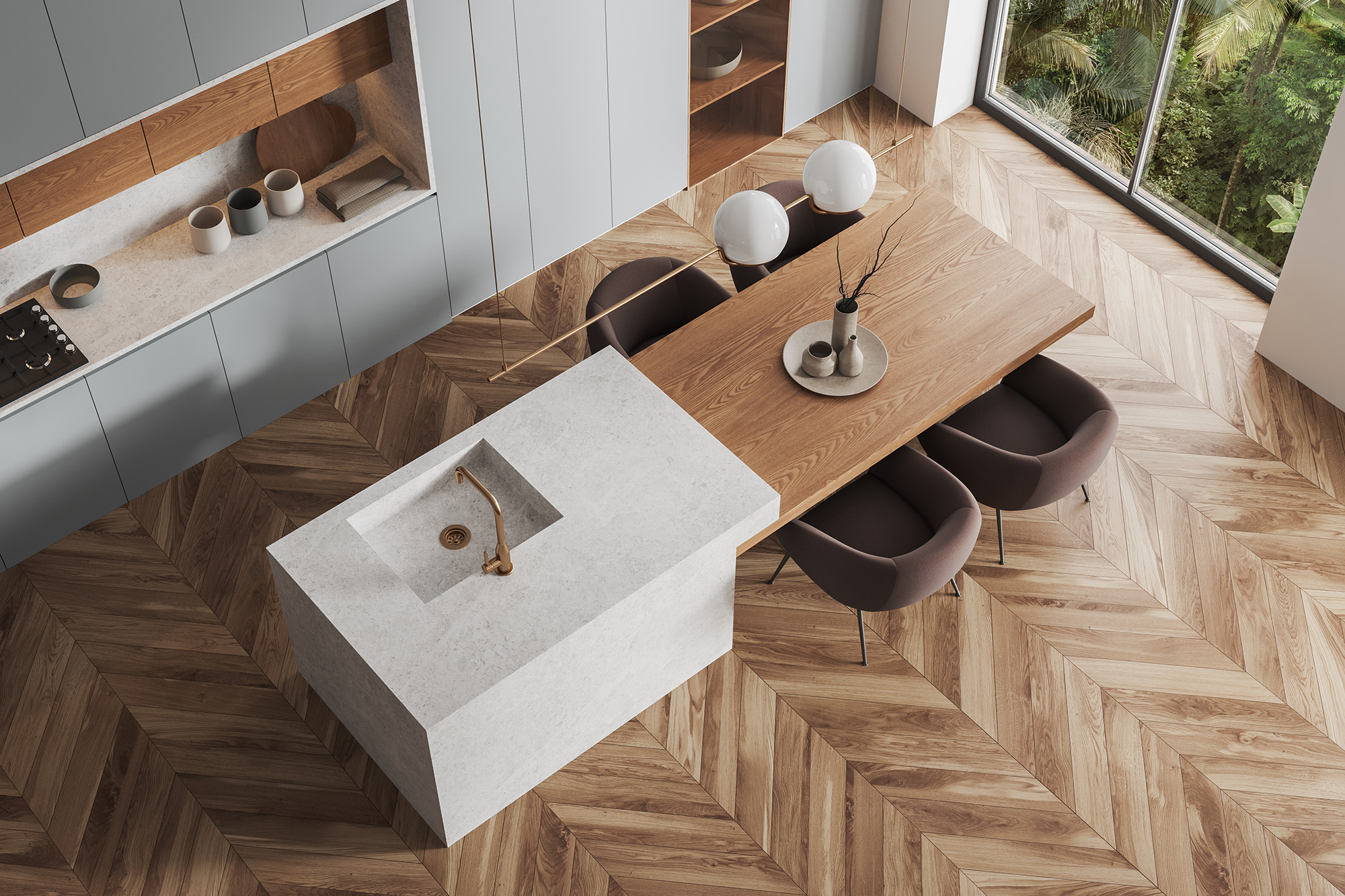
Homeowners shopping for wood flooring often assume the choice comes down to looks and budget. At elevations above 3000 feet, the more important factor is how each type of wood handles the constant expansion and contraction that mountain weather causes.
Why Elevation Changes How Wood Floors Behave
Wood is a natural material that absorbs and releases moisture from the surrounding air, expanding when humidity rises and contracting when it drops. At higher elevations, homes experience faster and more frequent shifts between damp summer air and dry winter heat than homes at lower altitudes. That constant movement puts more stress on wood flooring than most manufacturers account for in their standard installation guidelines.
This is why flooring that performs beautifully in a coastal or piedmont home can struggle once installed above 3000 feet. Gaps that open in winter and close in summer are normal to a degree, but excessive movement leads to cupping, cracking, and finish damage over time. Understanding this baseline is the first step to choosing a floor that will actually last in a mountain home.
How Solid Hardwood Responds To Mountain Humidity
Solid hardwood is prized for its durability and the ability to be refinished multiple times over its lifespan, but it is also the most reactive to humidity changes. Because it is a single piece of wood through its full thickness, it expands and contracts more dramatically than engineered options, especially in wider plank widths that have become popular in mountain homes. Homes without consistent humidity control, including second homes left unoccupied part of the year, see the most noticeable movement.
That does not mean solid hardwood is off the table at elevation, but it does mean installation matters more than usual. Proper acclimation before installation, adequate expansion gaps, and a whole home humidity control system make a meaningful difference in how well solid hardwood performs long term. Homeowners who commit to those extra steps are often rewarded with a floor that lasts for decades.
Why Engineered Wood Often Performs Better At Altitude
Engineered wood flooring is constructed with a real hardwood top layer bonded over cross layered plywood, which gives it more dimensional stability than solid wood. That layered construction resists the expansion and contraction that causes gapping and cupping, making it a strong option for homes that experience wide humidity swings or sit unoccupied for stretches of the year. Many homeowners in the High Country choose engineered wood specifically for this reason.
Engineered wood also opens the door to wider plank styles that would be riskier in solid hardwood at this elevation, since the stability of the plywood core reduces movement even in an eight inch or wider plank. For homeowners who want the wide plank look popular in mountain lodge style interiors without the maintenance concerns of solid wood, engineered flooring is often the more practical choice.
Matching The Right Wood Floor To Your Specific Home
The right choice ultimately depends on how the home is used, not just its elevation. A primary residence with a consistent HVAC system running year round can support solid hardwood with fewer issues than a seasonal cabin that swings between heated and unheated periods. Second homes, rental properties, and cabins left vacant for weeks at a time generally do better with engineered wood.
Local experience matters here as well, since flooring that performs well in one part of the mountains may behave differently a few hundred feet higher or lower. Ultimate Kitchen and Design walks homeowners through these details before recommending a product, taking into account elevation, occupancy patterns, and how the home is heated and cooled throughout the year.
Choosing between engineered wood and solid hardwood at elevation is less about preference and more about how the home will actually be lived in. Getting this decision right up front prevents costly repairs and refinishing down the road.
Ultimate Kitchen and Design helps homeowners across Banner Elk, Franklin, and Lenoir, NC and Roanoke, and Bristol, VA and Johnson City, TN choose flooring built for real mountain conditions, not just the showroom floor. Stop by any of Banner Elk, NC to compare samples in person, or contact us to talk through what will work best in your home.

