


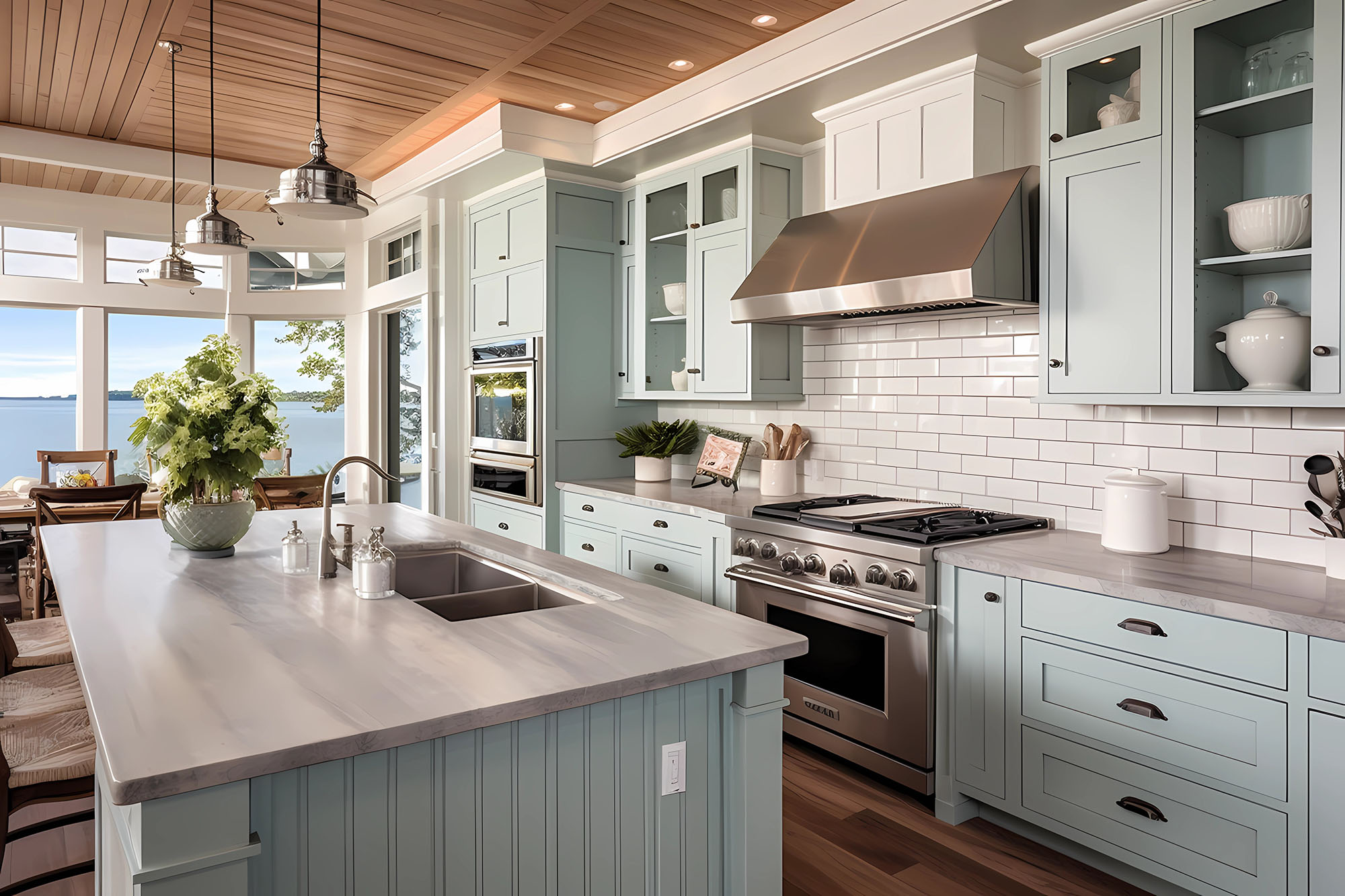
Most homeowners planning a kitchen ask how many cabinets they need before they ask how they actually use their kitchen day to day. Flipping that order tends to lead to a much more useful answer, and a kitchen that actually works once the boxes are unpacked.
Why Household Size Alone Does Not Answer The Question
It is tempting to assume storage needs scale directly with the number of people in a household, but cooking habits usually matter more than headcount. A household of two who cooks elaborate meals from scratch every night, with a full pantry of specialty ingredients, often needs more storage than a larger family that relies on simpler weekly staples. The way food gets prepared and stored has a bigger impact than how many people are eating it.
This is why two kitchens of the same square footage, in homes with the same number of residents, can end up needing very different cabinet layouts. Taking stock of how meals actually get made, from grocery habits to how often small appliances come out of storage, gives a far more accurate picture than working from square footage or family size alone.
What Tends To Get Underestimated
Small appliances are one of the most commonly underestimated storage needs, since a stand mixer, air fryer, slow cooker, and blender can quietly eat up an entire lower cabinet on their own. Bakeware and large serving pieces used only a few times a year also tend to get forgotten during planning, even though they still need a home somewhere in the kitchen. These items are easy to overlook because they are not part of daily cooking, but they still take up real cabinet space.
Pantry storage is another area that often gets underestimated, particularly for households that buy in bulk or keep a wider variety of dry goods on hand. A single narrow pantry cabinet can look sufficient on a floor plan, but it fills up quickly once real grocery habits are accounted for rather than a generic starter list of staples.
Kitchens with the following in regular rotation tend to need more dedicated storage than a standard layout provides:
Multiple small appliances used weekly
Bulk pantry goods or specialty ingredients
Large cookware sets or bakeware collections
Serving pieces for entertaining
How To Plan Storage Around Real Habits
Walking through an existing kitchen and noting what currently lives on the counter, rather than in a cabinet, is one of the most useful planning exercises a homeowner can do. Items that end up on the counter because there was nowhere else to put them are a clear signal of where additional storage is actually needed in a new layout. This kind of honest inventory tends to be far more accurate than estimating from scratch.
It also helps to think about frequency of use when deciding where storage goes, keeping everyday items within easy reach and reserving higher or harder to access cabinets for things used only occasionally. Pull out drawers, deep drawer stacks, and corner storage solutions can all add meaningful capacity without expanding the kitchen footprint, which is worth discussing during the design process rather than after cabinets are already ordered.
Getting The Layout Right Before Committing
A showroom conversation that walks through actual daily habits, rather than a generic storage checklist, tends to produce a layout that still feels right years later. Storage needs can shift over time as cooking habits change, so building in a little flexibility, such as adjustable shelving, is worth factoring into the plan from the start.
Comparing a few different cabinet configurations side by side, rather than settling on the first layout that fits the floor plan, often reveals storage opportunities that were not obvious on paper. This extra planning step tends to pay off in daily convenience long after the renovation is finished.
The right amount of kitchen storage comes down to how a household actually cooks, shops, and entertains, not a generic rule based on square footage or family size. Taking the time to plan around real habits leads to a kitchen that stays functional well beyond the first year.
Ultimate Kitchen and Design helps homeowners across Banner Elk, Franklin, and Lenoir, NC and Roanoke, and Bristol, VA and Johnson City, TN plan cabinet storage around how their kitchen actually gets used every day. Visit any of Banner Elk, NC to walk through layout options and storage solutions in person, or contact us to start planning cabinets built around your real routine.

